
What are concepts and why are they so important for children to understand?
Concepts are used everyday. They help children understand the world around them and enable everyone to include enough information for others to understand them. For example, if your child keeps requesting “dinosaur,” how do you know which dinosaur they want? The green one? The noisy dinosaur ? Two dinosaurs? Colour, sound and quantity are all examples of concepts. As children develop their understanding of a concept, this supports them to start saying them.
Did you know that pupils in schools, using strategies to target learning and understanding of concepts, have increased early numeracy skills.
Some concepts do not relate to a physical attribute, such as again, now and after. For example a child may be upset because they want a snack now, but they are told to eat it after dinner. Understanding time related concepts supports children to understand the world around them and when things are happening. Some children worry when things are different and understanding time concepts supports them to know when things will be back to normal such as “after lunch you have speech therapy, then you have maths.”
.
How many of the following concepts do you use and does your child understand?
Below there are some lists of early concepts and level 1 concepts. It’s likely that you use more of these when talking to your child than you may be aware of. Some concepts develop earlier, such as go and stop. Understanding and communicating these concepts is very important for not only communication but also everyday life. For example, understanding ‘stop’ is very useful when it comes to safety. After a child develops early concepts, such as stop and go, these develop further into concepts such as fast and slow.
| Early Concepts | |
| Quality | dirty |
| Size | big |
| Texture | wet, hot |
| Quantity | more |
| Position | on, in, up, down |
| Level 1 Concepts | |
| Quality | like |
| Colour | blue, green, red |
| Texture | hard, soft |
| Sound | noisy, quiet |
| Size and Shape | heavy, little, round |
| Movement | fast, slow |
| Quantity | a bit, all, a lot, some |
| Position | inside, off, out, over, to, through, under |
| Time | again, now |
| Number | one, two |
| Feelings | good, happy, sad |
How can I help my child learn concepts?
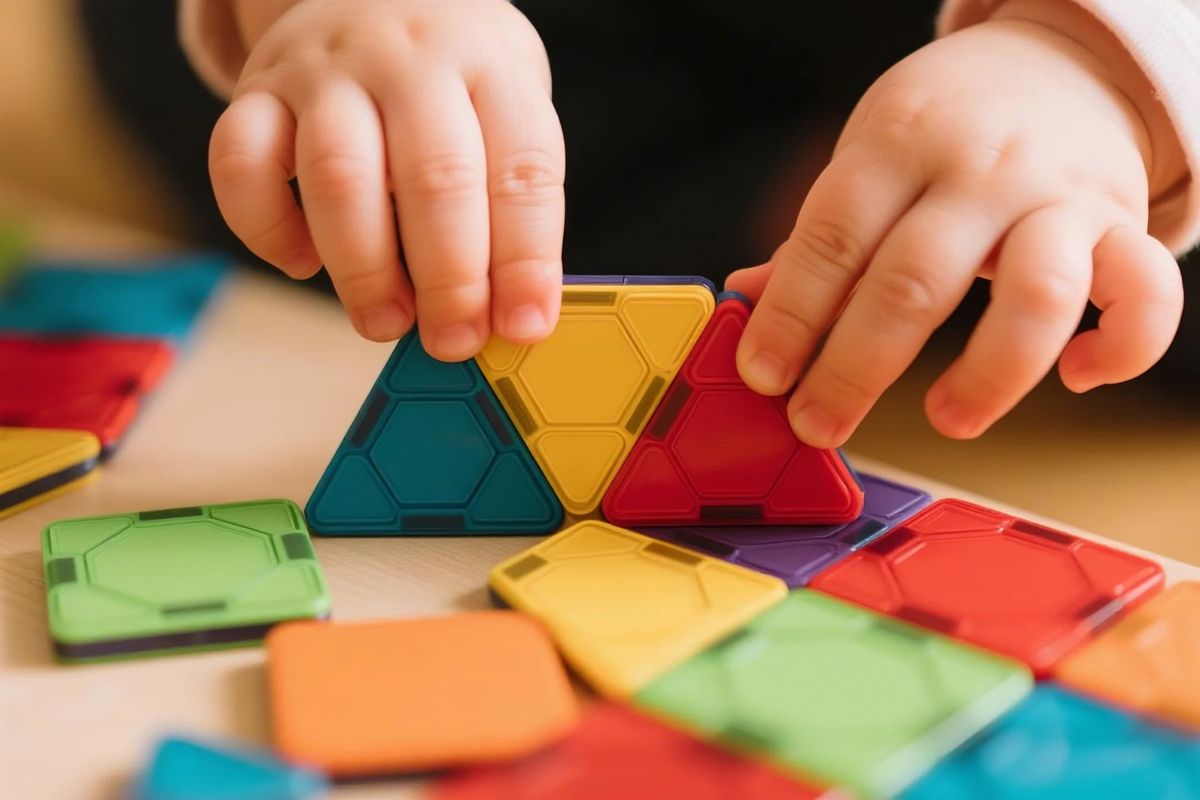
Relate concepts to your child’s favourite toys or familiar experiences and talk about what’s in front of you. It is better to teach concepts with a familiar toy, so your child is not learning about the new toy at the same time as learning the concept. For example, if your child loves building blocks, try the following. Have a big and a small building block in front of you and say “I want a big block” , pause and look at the two blocks, then pick up the big block (ignoring the small block) and say “I found a big block!”. Many concepts come as opposite pairs, such as big/small and hard/soft. Having visuals and being able to compare to something which is the opposite supports understanding to develop. However, only teach one concept at a time. When referring to the big block, label the small block as “not big.”
Things to remember
- Teach one concept at a time.
- Understanding a concept comes before children use them
- Your children will learn concepts based on their experiences. For example, if you have a dog they might learn wet and dirty first!
- If you would like some support with concepts you can ask your MTW Speech and Language Therapist for more information!