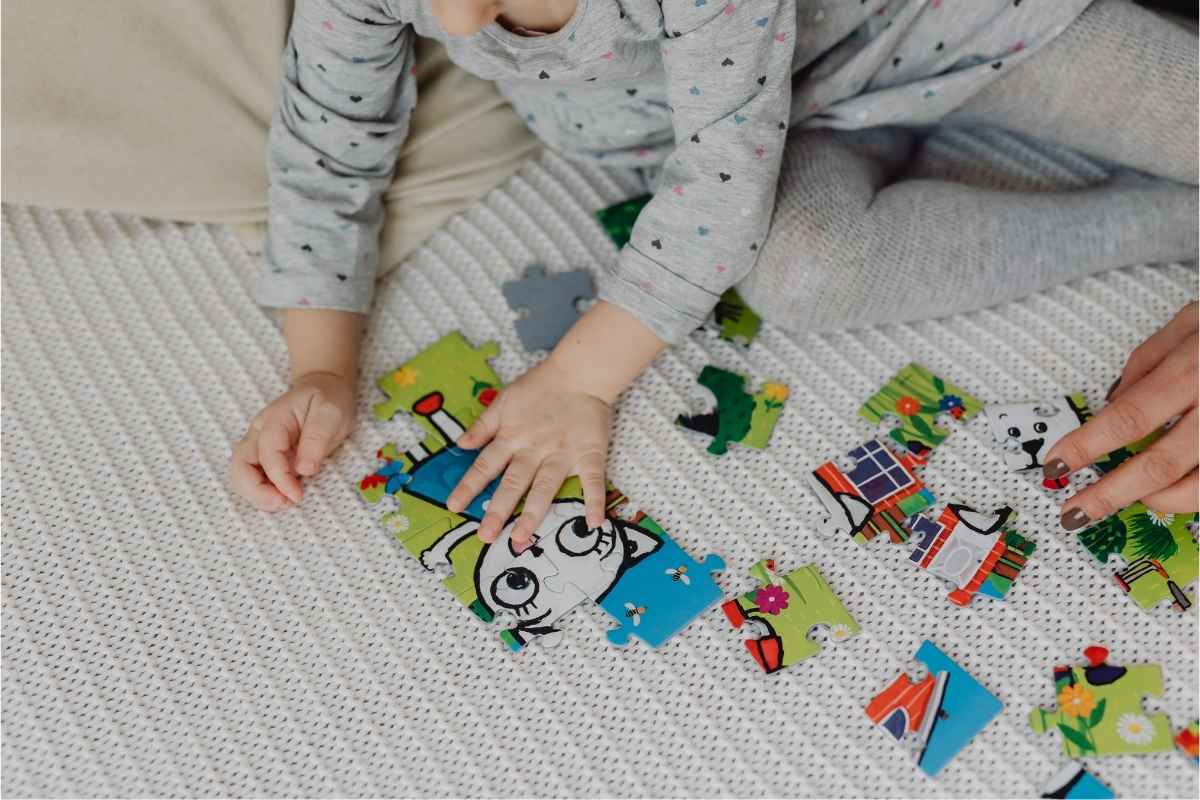
If you walked into one of my therapy sessions, you would probably think, ‘mmm, she is just playing.’ You would be absolutely right. It looks like play because that is exactly what it is. There will probably be dinosaurs, Mr Potato Head, or building blocks all over the floor, bubbles being blown and porridge oats finding their way into every nook and cranny. I will spend most of the time on the floor, and it will look like there is no method to the madness. But here’s the thing. All of this is rooted in purpose – in building communication, confidence, connection and empowerment.
Those four words are at the heart of our approach at MTW Speech and Language Therapy. And they are not just values that we stick on a wall or on our website. They guide us through everything we do – each decision we make and each session we plan. They are the foundation of every relationship we have the privilege of building with the children and the families that we work with.
Communication and Confidence – the real goals behind the games
By ‘just playing,’ we are creating opportunities – for words, for interaction, for problem-solving, for turn-taking and for shared joy. This is where communication grows best. Language becomes meaningful through play. When a child wants to take a turn with the toy, or giggles at our silly voices, that’s connection. Here is their motivation. It’s when the real work gets done. And how about confidence? Where does it come from? It comes from being understood. When a child sees that it is ok for them to communicate in a way that works for them, that they are accepted and that we are right there with them – celebrating every time they try a new sound or a sign or even an idea.

Empowerment – for families as much as for children
A huge part of our job is supporting not just the child, but the people around them. We want to empower parents, carers, grandparents (and anyone else in the child’s life) to feel confident enough to support their child’s communication journey. What does this look like? Giving them the tools they need, answering every ‘silly’ question (none of which are silly by the way) and celebrating each step no matter how tiny they may seem (they never are tiny)!
Small changes can open up a whole new way to connect – this could be pausing a little longer or following their child’s lead in play. Or it can just simply be telling them that they are doing a great job.
We often meet families during their most difficult times. When they don’t know what else to try, who else to turn to or how to move forward. It never ceases to amaze me how quickly we can have an impact, how these small changes can have such huge repercussions. I’ve seen a home go from a fractious, anxiety filled space, to one of hope, joy and positivity. No, I don’t have a magic speech and language therapy wand and I can’t take families off the path that they are on, or make everything better and easier overnight. What I do have is the time and space to be able to guide them to a place where there is a bit more hope, where they can see that they can make a difference to their child’s communication and connection to their world.
Why do connection and trust matter so much?
Before we can make any difference to a child’s communication, we need to build trust. Children learn best when they feel safe, seen and accepted. This takes time. We notice what makes a child’s face light up, what motivates them, what worries them. We get to know our families – what they are going through, what they are finding tricky, what matters to them most right now. Without this connection, all the targets and clever strategies in the world will remain redundant. But when there is connection, we see children go from silent to singing, unsure to unstoppable, frustrated to flourishing. So yes, all the ‘just playing’ that we do is part of a bigger picture. It’s powerful and it’s purposeful. And we’re not sorry.